
key takeaways
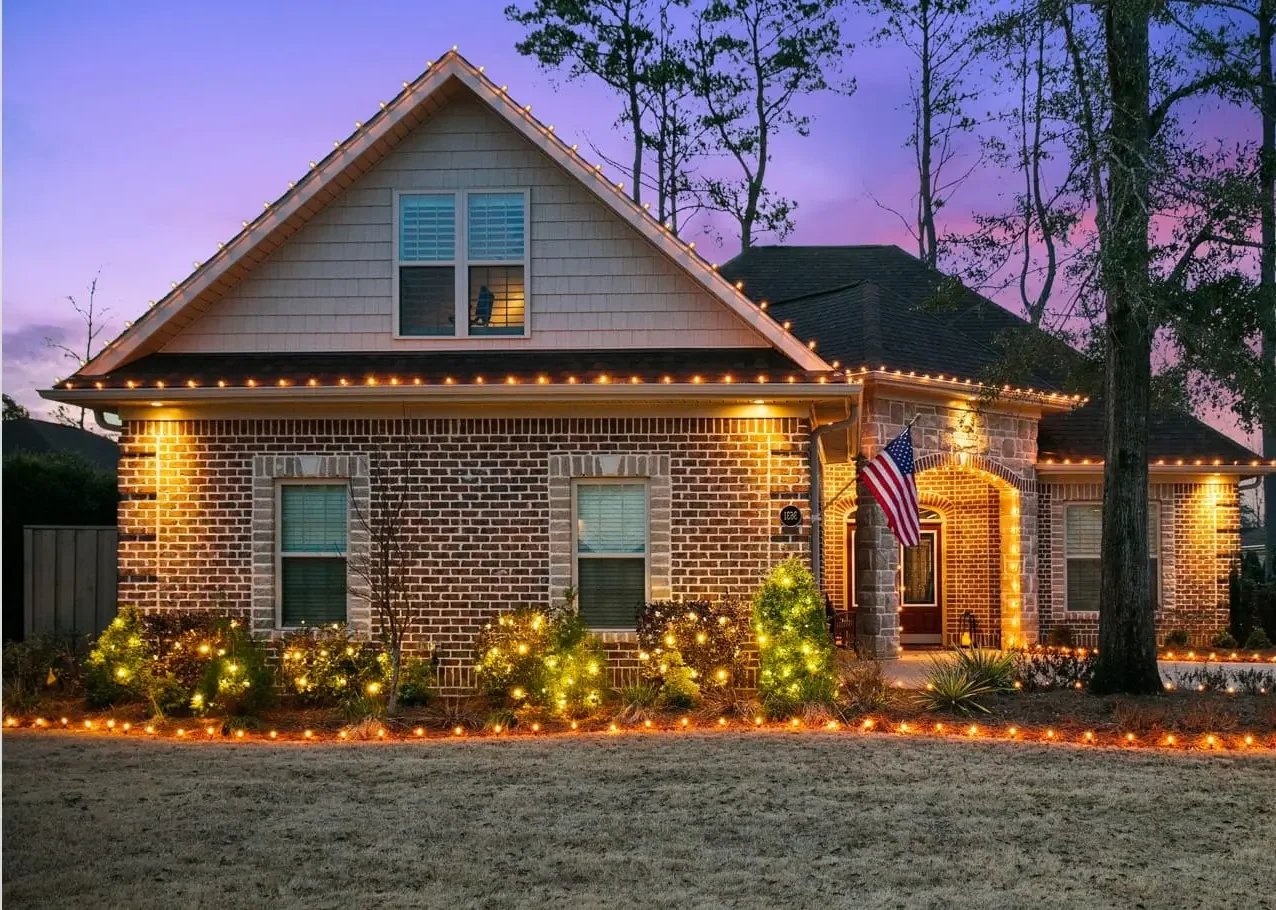
- —Traditional professional-grade LED Christmas lights are often the better choice for homeowners who prefer a classic look, dependable operation, and minimal troubleshooting.
- —Smart Christmas lights offer app control, color-changing effects, scheduling, and custom animations, making them a good fit for homeowners who enjoy technology and personalization.
- —Professional Christmas light installation is still essential for safe mounting, weatherproof connections, proper power distribution, and long-term performance.
- —Outdoor smart lighting systems can face reliability issues from Wi-Fi limitations, moisture, heat, wind, and software glitches, especially on larger homes and coastal properties.
Smart Christmas lights sound great on paper.
Change colors from your phone.
Set schedules.
Sync to music.
Turn everything on and off without touching a timer.
But after working around thousands of homes and a lot of different lighting systems, the real question isn’t “Are they cool?”
It’s: Are they actually worth it for outdoor, real-world use?
Here’s the honest answer.
What Smart Christmas Lights Do Well
There’s no denying the appeal.
Smart systems let you:
- Control lights from an app
- Create color patterns and animations
- Schedule on/off times
- Sync with music or holidays
- Adjust brightness and zones
For people who love tech and customization, it can be a lot of fun.
Where Smart Lights Start to Struggle
Outdoor environments are a different world than living rooms.
Heat, humidity, wind, rain, and long cable runs all affect reliability. In places where fall can still feel like summer and weather can change quickly, we see a few common issues:
- Wi-Fi range limits for large homes and yards
- Signal dropouts when routers are far from rooflines or trees
- Controller failures after moisture exposure
- Software glitches that turn a simple on/off into troubleshooting
When everything works, it’s impressive.
When it doesn’t, it can be frustrating.
Installation Still Matters
No matter how smart the system is, it still has to be:
- Safely mounted on rooflines and trees
- Properly clipped and secured for wind
- Weather-sealed at every connection
- Powered correctly without overloaded circuits
App control doesn’t replace good physical installation.
Cost vs. Simplicity
Smart systems usually cost more upfront.
You’re paying for:
- Controllers
- Specialized strands
- Power supplies
- Software ecosystems
Traditional LED lighting, paired with quality timers and zoning, can deliver a clean, reliable look with far fewer points of failure.
So Are They Worth It?
Smart Christmas lights make sense if you:
- Love technology
- Want color-changing displays
- Enjoy programming and tweaking settings
- Don’t mind occasional troubleshooting
Traditional professional-grade LED systems make more sense if you:
- Want rock-solid reliability
- Prefer a classic, elegant look
- Don’t want to deal with apps and updates
- Just want your lights to turn on every night without thinking about it
The Bottom Line
Smart Christmas lights are impressive and fun.
But for many homeowners, especially those with larger homes, tall rooflines, or coastal and hot-weather conditions, simplicity and reliability still win.
ABOUT THE AUTHOR