
key takeaways
- —A standard step ladder won’t cut it, you need a proper extension ladder and a spotter at all times.
- —Steep or slippery roof types (tile, metal) change everything, know what you’re working with before you get up there.
- —Skip the staples and nails. Use clips made for your specific roofing material, they protect the house and hold better.
- —Too many strands on one circuit is a fire risk, plan your electrical load before you start running wire.
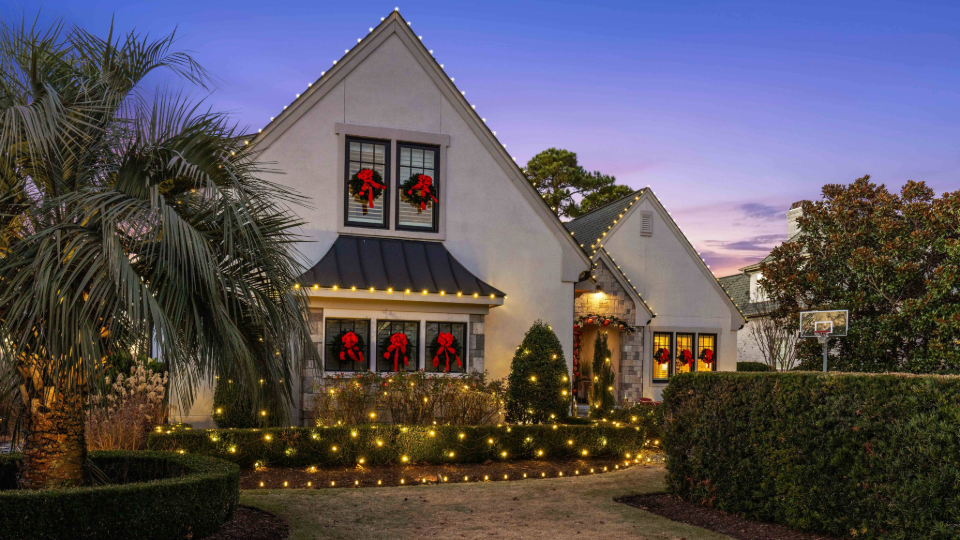
Two-story homes look incredible when they’re lit well. Tall rooflines, peaks, entryways, and upper windows create a lot of opportunity for a clean, classic Christmas look.
They also happen to be where most accidents happen.
Every season we talk with homeowners who say, “I was just going to get up there real quick…”
That’s usually how trouble starts.
If you’re planning to hang your own Christmas lights on a two-story house, here’s what you need to think about first.
The Ladder Is the Real Challenge
Most injuries don’t happen because of the lights.
They happen because of the ladder.
You’ll need:
- A properly rated extension ladder
- Level, stable ground
- Someone spotting the ladder at all times
- A way to secure the top so it can’t shift sideways
- Enough height to reach the roofline without standing on the last rung
Uneven ground, wet grass, pine straw, mulch, or sloped driveways make stability even more critical.
Roof Type Matters
Different roofs change the risk level:
- Asphalt shingles: Can be slick, especially with morning dew or light rain
- Metal roofs: Extremely slippery, even when dry
- Tile roofs: Fragile and expensive to damage
- Steep pitches: Increase the chance of losing footing
Before anyone steps off a ladder, they should understand what surface they’re stepping onto and whether they should be stepping onto it at all.
Use the Right Clips (Never Staples or Nails)
One of the biggest mistakes we see is people attaching lights with whatever is handy.
Never use:
- Staples
- Nails
- Screws
- Tape (yes, we’ve actually seen a local “professional company” use duct tape to secure lights to the roofline)
Use clips designed specifically for:
- Shingles
- Gutters
- Metal roofing
- Stucco and brick
Proper clips:
- Keep bulbs upright
- Prevent wire from rubbing on sharp edges
- Reduce the chance of lights being pulled loose in wind
- Protect your roof from damage and leaks
We recommend commercial grade Shingle Tabs or Tuff Flex Clips.
Mind the Power and the Load
Two-story rooflines often require longer runs of lights.
Make sure:
- You’re using outdoor-rated power wire
- Circuits aren’t overloaded
- Connections are elevated off the roof surface where water can pool
- Timers and GFCI outlets are used properly
Electrical safety is just as important as fall safety.
Know When It’s Time to Step Back
If your setup involves:
- Steep roof pitches
- Long spans over open space
- Hard-to-reach peaks
- Windy conditions
- Or working alone
That’s usually the point where DIY stops being “saving money” and starts being “taking unnecessary risk.”
The Bottom Line
Hanging Christmas lights on a two-story home can look amazing.
But it should never come at the cost of your safety.
The right equipment, the right mounting hardware, and realistic limits on what you’re comfortable doing are what keep a festive project from turning into an emergency room visit.
If you’re not completely confident on a ladder at that height, the safest choice is also the simplest one:
Let someone who does this for a living handle the roof — and enjoy the view from the ground!
ABOUT THE AUTHOR