
Christmas lights have long been a symbol of the holiday season, illuminating homes, streets, and businesses with festive vibe. But have you ever wondered how this tradition began? The history of Christmas lights is a fascinating journey from the simplicity of candles on trees to the energy-efficient LED displays we see today. In this blog, we’ll explore the origins, technological advances, and iconic displays that have shaped the evolution of Christmas lighting.
The Origin of Christmas Tree Lighting
The tradition of lighting Christmas trees dates back to 17th-century Germany, where families would use small candles to decorate their trees. This practice was both symbolic and spiritual, representing the stars that lit the night sky during Christ’s birth. However, as beautiful as the candle-lit trees were, they were also incredibly dangerous, leading to numerous fires.
These early candles were affixed to trees with melted wax or pins, making the setup both tedious and hazardous. While this form of decoration was popular among the wealthy, the risk of fire prevented widespread adoption.
The First Electric Christmas Lights
The invention of electric lights by Thomas Edison in 1879 was a game-changer for Christmas lighting. In 1882, Edison’s associate, Edward H. Johnson, created the first electric Christmas lights by stringing together 80 small red, white, and blue bulbs and wrapping them around a Christmas tree in his New York home. This display was revolutionary and marked the beginning of electric Christmas lights as a safer alternative to candles.
While electric lights were initially expensive and only available to the wealthy, their safety and convenience made them an attractive option. By the early 20th century, companies like General Electric began producing pre-assembled electric Christmas light kits, making them more accessible to the general public.
The Popularization of Christmas Lights in the 20th Century
The widespread adoption of electric Christmas lights took off in the early 1900s. In 1903, General Electric introduced pre-wired Christmas light strings, which made it easier for families to decorate their trees without the hassle of wiring individual bulbs.
By the 1920s and 1930s, Christmas light displays started to move outdoors. Public spaces, businesses, and neighborhoods began decorating trees, buildings, and streets with electric lights, creating a festive atmosphere that brought communities together. In 1923, the first National Christmas Tree was lit outside the White House, a tradition that continues today. This shift marked the beginning of large-scale outdoor Christmas displays that we associate with the holidays today.
The post-war economic boom in the 1950s further popularized Christmas lights, as families across the U.S. embraced the holiday spirit by decorating their homes inside and out. Large bulb lights, known as C7 and C9, became the standard for outdoor displays, with their bright, colorful glow illuminating neighborhoods across the country.
The Transition from Incandescent to LED Christmas Lights
For much of the 20th century, incandescent bulbs dominated Christmas light displays. These lights were popular for their warm glow, but they were not energy-efficient and had a tendency to overheat or burn out.
The introduction of LED (Light Emitting Diode) technology in the late 20th century transformed Christmas lighting once again. LED lights offered a more durable, energy-efficient, and safer alternative to incandescent bulbs. Not only do LED lights last significantly longer, but they also use up to 80% less energy, making them a more environmentally friendly option.
LEDs have opened up new design possibilities as well. They come in a variety of colors, shapes, and sizes, allowing for more creative displays. Additionally, their energy efficiency has made it feasible to create massive, intricate light displays without the high electricity costs that would have come with traditional incandescent bulbs.
Iconic Christmas Light Displays Through the Years
Over the years, several iconic Christmas light displays have captured the imagination of people around the world. Here are a few standout examples:
Rockefeller Center, New York: Perhaps the most famous Christmas tree lighting in the world, the annual Rockefeller Center Christmas tree has been lit with thousands of twinkling lights since the 1930s, drawing millions of visitors each year.
The Osborne Family Spectacle of Dancing Lights: What started as a simple display at the Osborne family’s home in Arkansas grew into a massive light show at Disney’s Hollywood Studios in Florida, running from 1995 to 2015. This dazzling display featured over five million lights synchronized to music.
Dyker Heights, Brooklyn: Known for its over-the-top Christmas lights, the Dyker Heights neighborhood in Brooklyn has become a must-see for holiday enthusiasts, with homes covered in tens of thousands of lights, inflatables, and festive decorations.
These iconic displays have inspired communities and businesses worldwide to create their own elaborate light shows, spreading holiday cheer and lighting up entire towns and cities.
Modern Innovations in Christmas Lighting
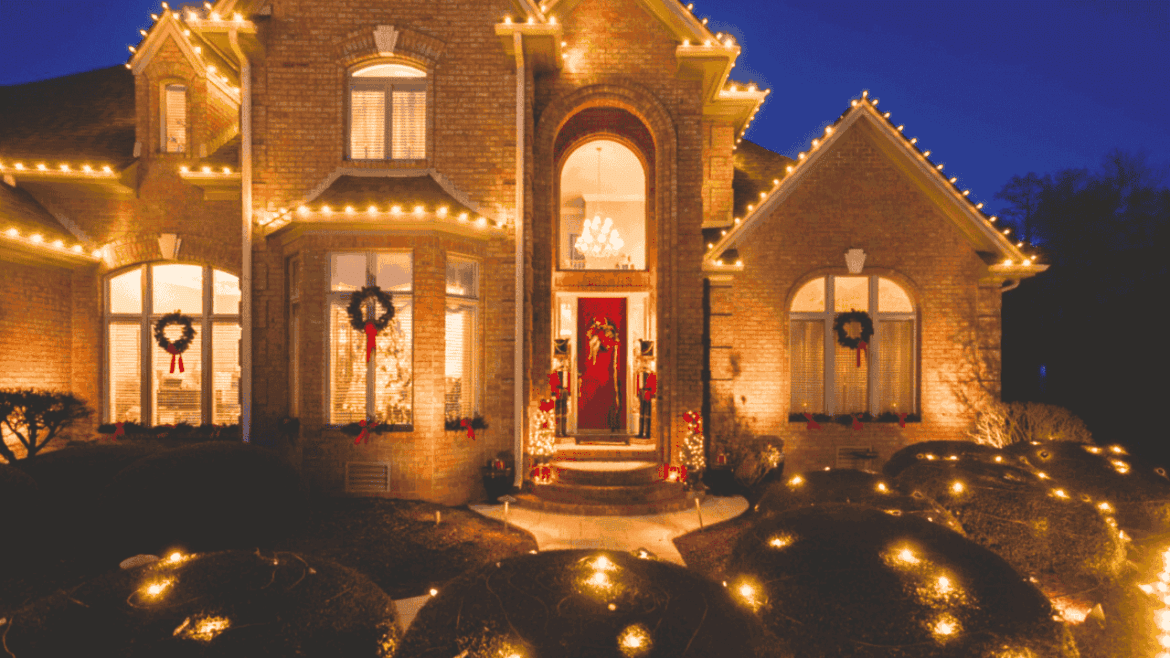
The 21st century has brought about even more innovations in Christmas lighting. Today, many businesses and homeowners are using smart lights that can be controlled via apps or voice assistants like Alexa and Google Home. These lights allow for customizable color patterns, brightness levels, and even music synchronization.
Solar-powered Christmas lights are another recent development, offering an eco-friendly option for outdoor displays. With advances in battery technology, solar lights can now store enough energy during the day to provide consistent illumination throughout the night, reducing both environmental impact and electricity costs.
Projection mapping is another modern technique that has gained popularity, allowing businesses to create large-scale, animated light shows that can be projected onto the sides of buildings, bringing holiday magic to life in new and exciting ways.
From humble beginnings with candles on trees to the vibrant, energy-efficient LED displays of today, the history of Christmas lights is a testament to human innovation and our desire to celebrate the holiday season with light and color. As we continue to embrace new technologies and creative ideas, Christmas lights will remain a beloved tradition that brings joy to both businesses and communities.
Want a Modern Holiday Display with a Nod to Tradition? Bring the history of Christmas lights into your home with a professionally designed, modern display. At Let There Be Light, we specialize in professional Christmas light installations that combine tradition with modern innovation. Contact us today to create a custom holiday lighting setup that combines the best of the past and present! Get a Free Quote Now!