
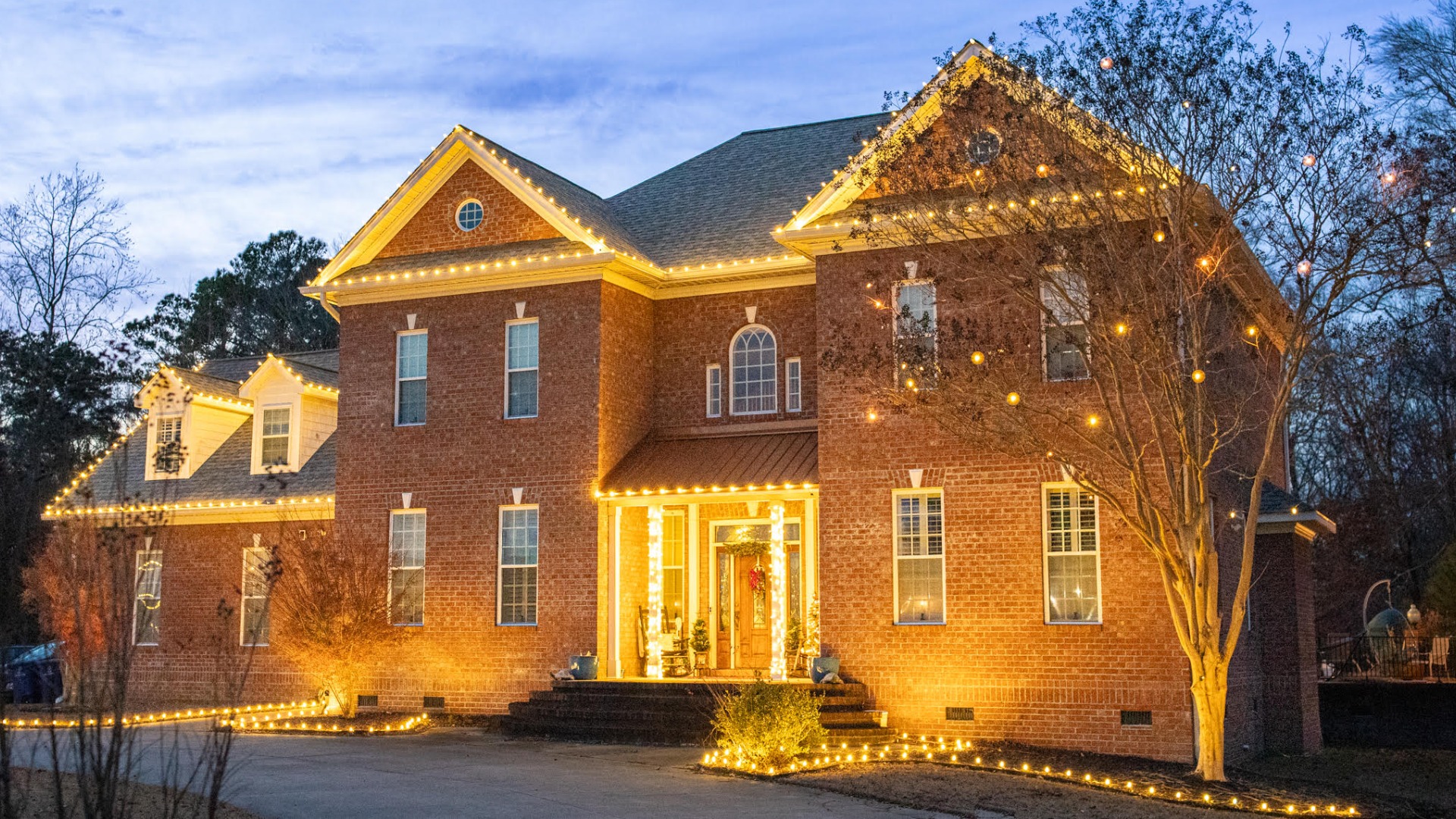
If you’ve ever stood in the holiday aisle staring at boxes of lights and wondering which ones are actually better, you’re not alone.
LED or incandescent.
Warm or bright.
Old school glow or new technology.
After working with Christmas lighting for more than 15 seasons, here’s the honest truth:
Most homeowners care about three things:
How it looks.
How long it lasts.
And whether it becomes a headache halfway through the season.
So let’s talk about the real differences.
Brightness & Look
Incandescent lights have that classic, soft glow a lot of people grew up with. They’re warm, familiar, and nostalgic.
LED lights are cleaner and more consistent. The color doesn’t fade, the brightness stays even from bulb to bulb, and they don’t get that yellowed look over time.
Modern warm-white LEDs are much closer to the traditional look than they used to be, without the uneven dimming or color shift.
Power Usage
This is where LEDs clearly win.
LED lights use a fraction of the electricity of incandescent bulbs. You can run longer rooflines, bigger trees, and full-yard displays without overloading circuits or tripping breakers.
That matters even more in larger homes and in warmer climates, where holiday lighting is often running longer hours and competing with heating or cooling systems.
Heat & Safety
Incandescent bulbs get hot.
LEDs stay cool.
That difference affects:
- Fire risk
- How close lights can be mounted to roofing materials
- How they hold up in windy or humid conditions
- How comfortable it is to work with them during installation
Cooler bulbs also mean less stress on the wiring, which helps extend the life of the strands.
Durability & Lifespan
Incandescent lights are fragile. Filaments burn out. One failed bulb can take down an entire section.
LEDs are solid-state. They’re more resistant to vibration, wind, and temperature swings, and when one diode fails, it usually doesn’t kill the whole run.
That’s a big deal in coastal areas, high-wind neighborhoods, and two-story rooflines where mid-season repairs aren’t easy.
Upfront Cost vs. Long-Term Value
Incandescent lights are cheaper at the register.
LEDs cost more up front, but:
- Last many seasons longer
- Use far less electricity
- Require fewer replacements
- Handle outdoor conditions better
Over time, LEDs almost always end up being the better value.
So Which Should You Choose?
Incandescent lights still make sense for:
- Small, simple, short-term setups
- Indoor displays
- Nostalgic projects where warmth matters more than efficiency
LED lights make sense for:
- Rooflines and outdoor displays
- Large trees and landscapes
- Long run times
- Homes in heat, humidity, wind, and salt air
- Anyone who wants consistency and longevity
The Bottom Line
Both types can look beautiful.
But from a performance, safety, and long-term cost standpoint, LED Christmas lights are the clear winner for most outdoor installations today.
They’re brighter without being harsh.
Cooler without being dim.
And built to handle real weather, not just a few calm December nights.
That’s why, season after season, more homeowners and professionals make the switch and never go back.
Let There Be Light proudly offers warm-white hue LED bulbs to still give you the old-school look, but with the benefits of LED!